
How Nutrition Supports Skin Health Before and After Non-Surgical Aesthetic Treatments
Healthy skin depends on more than skincare products or cosmetic procedures. Every layer of the skin relies on nutrients that help maintain its structure, support repair, and protect against everyday environmental damage. Research from the American Academy of Dermatology and the National Institutes of Health shows that a balanced diet contributes to collagen production, wound healing, and overall skin function, making nutrition an important part of skin care before and after non-surgical aesthetic treatments.
People considering skin rejuvenation treatments in Los Angeles are often encouraged to think beyond the procedure itself. Physician-led practices such as My Aesthetic Doctor recognize that healthy eating, proper hydration, and good medical care work together to support better skin over time. Cosmetic treatments can improve visible concerns, while long-term lifestyle habits help maintain the skin’s overall health.
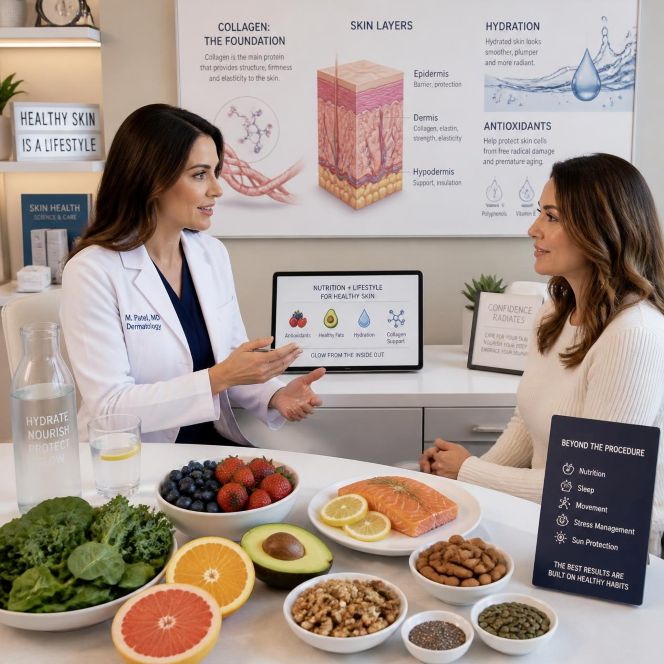
Why Nutrition Matters for Skin Repair
The skin constantly renews itself. Old cells are replaced, minor injuries heal, and collagen fibers are repaired throughout life. These natural processes require energy along with a steady supply of nutrients.
Experts from the Harvard T.H. Chan School of Public Health explain that proteins, vitamins, minerals, and healthy fats all contribute to tissue maintenance. When nutrient intake is inadequate, healing may become slower, skin can appear dull, and the body’s ability to repair damaged tissue may decline.
This becomes especially important before and after treatments such as microneedling, laser therapy, chemical peels, or injectable procedures. Although these treatments are minimally invasive, the body still relies on its natural healing response to achieve the best possible outcome.
Protein Provides the Building Blocks
Protein plays a central role in repairing tissues. Amino acids from dietary protein are used to create collagen, elastin, and other structural proteins that keep skin firm and resilient.
The National Institutes of Health Office of Dietary Supplements notes that collagen production depends on an adequate supply of amino acids. Individuals recovering from any procedure that stimulates skin repair generally benefit from meeting their daily protein requirements through foods such as:
- Fish
- Chicken and turkey
- Eggs
- Greek yogurt
- Beans and lentils
- Tofu and soy products
- Nuts and seeds
Consuming enough protein throughout the day supports ongoing tissue maintenance instead of relying on a single large meal.
Vitamin C Supports Collagen Formation
Vitamin C is one of the best-known nutrients for healthy skin. Findings from the National Institutes of Health Office of Dietary Supplements show that vitamin C serves as an essential cofactor in collagen synthesis. Without sufficient vitamin C, the body cannot efficiently build stable collagen fibers.
This vitamin also functions as an antioxidant. It helps protect skin cells from oxidative stress caused by ultraviolet exposure and environmental pollutants.
Foods naturally rich in vitamin C include:
- Oranges
- Strawberries
- Kiwi
- Bell peppers
- Broccoli
- Tomatoes
Eating a variety of colorful fruits and vegetables provides a consistent supply throughout the day.
Vitamin E Helps Defend Skin Cells
Healthy skin faces daily exposure to sunlight, pollution, and normal metabolic processes that generate free radicals. Vitamin E helps reduce oxidative damage by protecting cell membranes.
Studies published by the National Institutes of Health indicate that vitamin E works alongside vitamin C as part of the body’s antioxidant defense system. Together, these nutrients help preserve skin integrity while supporting recovery following treatments that temporarily stimulate controlled skin injury.
Good dietary sources include:
- Almonds
- Sunflower seeds
- Hazelnuts
- Spinach
- Avocados
Zinc and Wound Healing
Zinc is involved in hundreds of enzyme reactions throughout the body. Reports from the World Health Organization and the National Institutes of Health highlight its importance in immune function, cell growth, and tissue repair.
People with low zinc levels may experience slower wound healing because the mineral supports new cell formation and protein synthesis. Foods that naturally provide zinc include lean meats, seafood, dairy products, pumpkin seeds, beans, and whole grains.
Although supplements may be appropriate for individuals with documented deficiencies, experts generally recommend obtaining nutrients through a balanced diet whenever possible.
Hydration Keeps Skin Functioning Well
Water supports nearly every process within the body, including circulation, temperature regulation, and nutrient delivery. Proper hydration also helps maintain the skin’s barrier function.
The European Food Safety Authority explains that adequate fluid intake contributes to normal physiological function throughout the body. While drinking more water alone cannot eliminate wrinkles, dehydration can make skin appear less smooth and reduce its overall comfort.
Staying hydrated before and after aesthetic procedures supports normal recovery while helping maintain healthy skin function.
The Value of Antioxidant-Rich Foods
Oxidative stress contributes to visible skin aging over time. Diets rich in antioxidants may help reduce some of this cumulative damage.
Research published in the Journal of the American Academy of Dermatology suggests that dietary patterns emphasizing fruits, vegetables, legumes, nuts, and whole grains provide compounds that help protect skin cells from environmental stressors. People interested in learning more about nutrient-rich foods that support recovery after body contouring treatments can also explore practical dietary strategies that complement the body’s natural healing process following minimally invasive aesthetic procedures.
Foods commonly associated with higher antioxidant intake include berries, leafy greens, carrots, sweet potatoes, green tea, walnuts, and colorful vegetables. Rather than relying on one “superfood,” experts recommend eating a wide variety of plant-based foods.
Preparing for Non-Surgical Aesthetic Procedures
Good nutrition supports the body’s natural healing ability before treatment begins. Physicians may recommend maintaining balanced meals, staying hydrated, avoiding excessive alcohol intake, and discussing any supplements or medications before a scheduled procedure.
Each person’s medical history differs. Certain health conditions or medications may influence nutritional needs or recovery time, making individualized medical advice important.
After treatment, continuing healthy eating habits can support collagen remodeling while helping the skin recover according to its natural biological processes.
Nutrition Complements Professional Care
Even with excellent nutrition, the skin naturally changes with age. Collagen production gradually declines, elastin fibers become less resilient, and repeated sun exposure contributes to visible aging. Healthy lifestyle habits slow some of these changes, although they cannot completely prevent them.
For that reason, some individuals choose physician-guided non-surgical aesthetic treatments to address concerns such as fine lines, uneven texture, or reduced skin firmness. Clinics like My Aesthetic Doctor approach these treatments as one part of a broader wellness strategy that includes proper nutrition, sun protection, regular skincare, and personalized medical evaluation.
Conclusion
Nutrition provides the foundation for healthy skin throughout life. Adequate protein, vitamins C and E, zinc, hydration, and antioxidant-rich foods support collagen production, tissue repair, and the skin’s natural defenses. These everyday habits can help prepare the body before non-surgical aesthetic procedures and continue supporting recovery afterward.
Healthy eating, however, is only one piece of long-term skin care. Natural aging continues despite excellent nutrition, making professional evaluation appropriate for people seeking additional improvements. Combining evidence-based medical care with consistent lifestyle habits offers a balanced approach that supports healthier skin today and helps maintain its appearance well into the future.


